

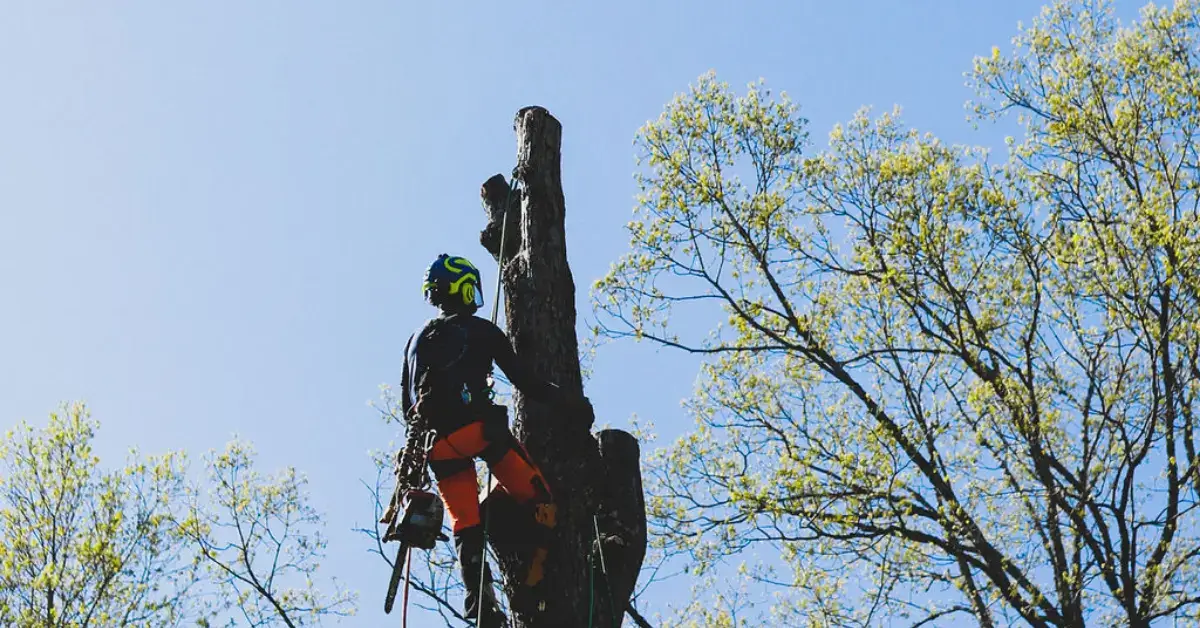
To avoid harming trees or creating future hazards, pruning guidelines have been established by the International Society of Arboriculture, some of which will be briefly described here. Exceptions to these guidelines should be made with the guidance of a qualified arborist and only when absolutely necessary.
Rule 1: Do Not Overprune
Pruning of live branches should not exceed 15-20% total crown (living branches) per year for mature trees. Branch or leader reduction cuts should not be made in excess of 20% to avoid death of the remaining branch system. Branch removal cuts back to a leader or trunk should not be in excess of 6″ diameter at the branch collar, ideally less (4″). The larger the wounds, the harder it is for the tree to compartmentalize.
Rule 2: Understand Branch Reduction Cuts
When performing branch reduction (as opposed to branch removal), it is not ideal to make an internodal cut, or to cut back to an inadequately sized lateral branch. Ideally, make a branch reduction cut back to a lateral that is at least 1 / 3rd the diameter of the apical branch being cut. If the lateral chosen is too small, it will not assume the role of the new apical leader. Additionally, if a substantial amount of a limb needs to be cut back (beyond 30%), it is usually better to remove it back to the parent stem or trunk rather than trying to reduce it. Too much pruning of a branch system is likely to cause future death of the remaining branch.
Rule 3: Do Not Harm the Branch Collar
Anyone pruning a tree should be properly trained on how to locate the branch collar and avoid damaging it. The branch collar has specialized tissue that aids in the tree’s compartmentalization of the open pruning cut. This is what stops the spread of wood decay fungi. “Flush cutting” a branch to the trunk clears this tissue and causes tremendous harm and greater wood decay. Leaving a stub will also hinder tree compartmentilization and will result in unnecessary wood decay (though not as bad as flush cutting). Pruning just outside the branch collar requires a trained eye and appropriate technique- usually employing a 3 cut method to avoid the weight of the branch tearing the bottom part of the branch collar.
Rule 4: Avoid Creating a Weaker Canopy Structure
Some pruning techniques can cause weaker structure for the tree in the longer term. One example is topping a tree (which also breaks rule 1), and another is known as “lion’s tailing”. Lion’s tailing is the removal of too many lateral sub branches along a branch system or leader, thereby concentrating the growth at the tip of the branch. Removal of lateral sub branches also takes away essential baffling for energy dispersal of strong winds, increasing the leverage effect on an elongated limb.
Rule 5: Prune at the Right Time
The ideal time to prune most trees is during their winter dormancy. However, it is generally acceptable to prune at other times of the year with two exceptions: during leaf formation in the spring, and during leaf drop in the fall. If disease is a concern, pruning during times of active disease growth should be avoided or performed with added precautions, such as cleaning of tools between cuts or trees.
Rule 6: Don’t Use Spikes to Climb Trees That Are Being Pruned and Not Removed
The spikes of climbing gaffs do injure most tree species.
Rule 7: Do Not Spray Pruning Sealant on Pruning Cuts
Pruning sealant prevents air exposure and interrupts the tree’s natural compartmentalization process. Unless a specific threat of disease is present which warrants it (unlikely at this time in WNC), this practice does more harm than good.